- Setup wizard
-
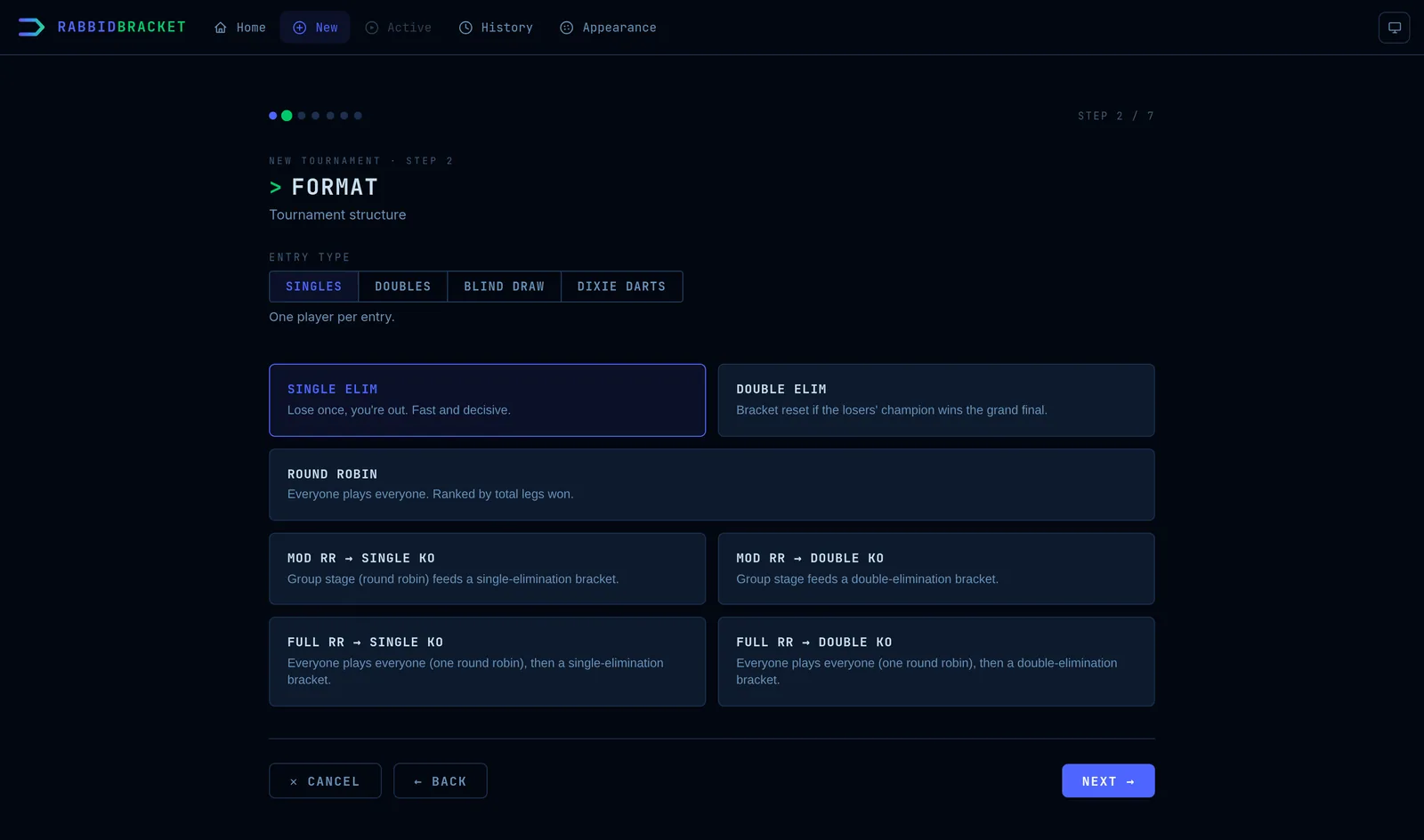
Seven steps: branding and colour scheme, entry type and format, match config, players, boards, entry
fee and payouts, then a full review before launch.
Nothing is locked in until you say go — and you're warned when it is.
Dixie runs in six, since a fixed 2/1/0 game has no legs to
configure.
- Board scheduling
-
Matches are pushed to boards as they free up, in phase order, and a player is
never double-booked. Placement matches and shootouts are scheduled like any other
match. Need a breather between rounds? Hold the next round.
- Board pins
-
In a Dixie event, pin a player — or a ghost filler — to a board
and their match is routed there every round, for anyone who shouldn't have to move between boards.
Set it in the wizard or change it mid-event; changes apply from the next round's draw and never move
a match already in progress. A held board reads "Board N (reserved)" so an idle
board doesn't look broken.
- Two screens, one order
-
Board cards are ordered by board number on the operator screen and the TV alike, so
a facilitator walking the room collecting results reads them in the order the boards physically sit
in — and the two screens never disagree. Still-to-play matches come first; finished ones sink.
- Scoring
-
Tap the board, record who won each leg. Winners advance, standings recompute, and the board is
released for the next match — all in one action. The only numeric entry is the
9-dart shootout used to break consequential ties.
- Mass score entry
-
For group stages run on paper: one grid that mirrors the printed sheet, with live per-group totals and
places as you type. Nothing is written until you submit, so cancel is always safe.
- Corrections & withdrawals
-
Edit a submitted result and the knockout cascade-resets only the matches downstream
of it, with a confirmation first. Round-robin edits recompute standings. A player who leaves early has
their remaining games removed or conceded as walkovers.
- Payouts
-
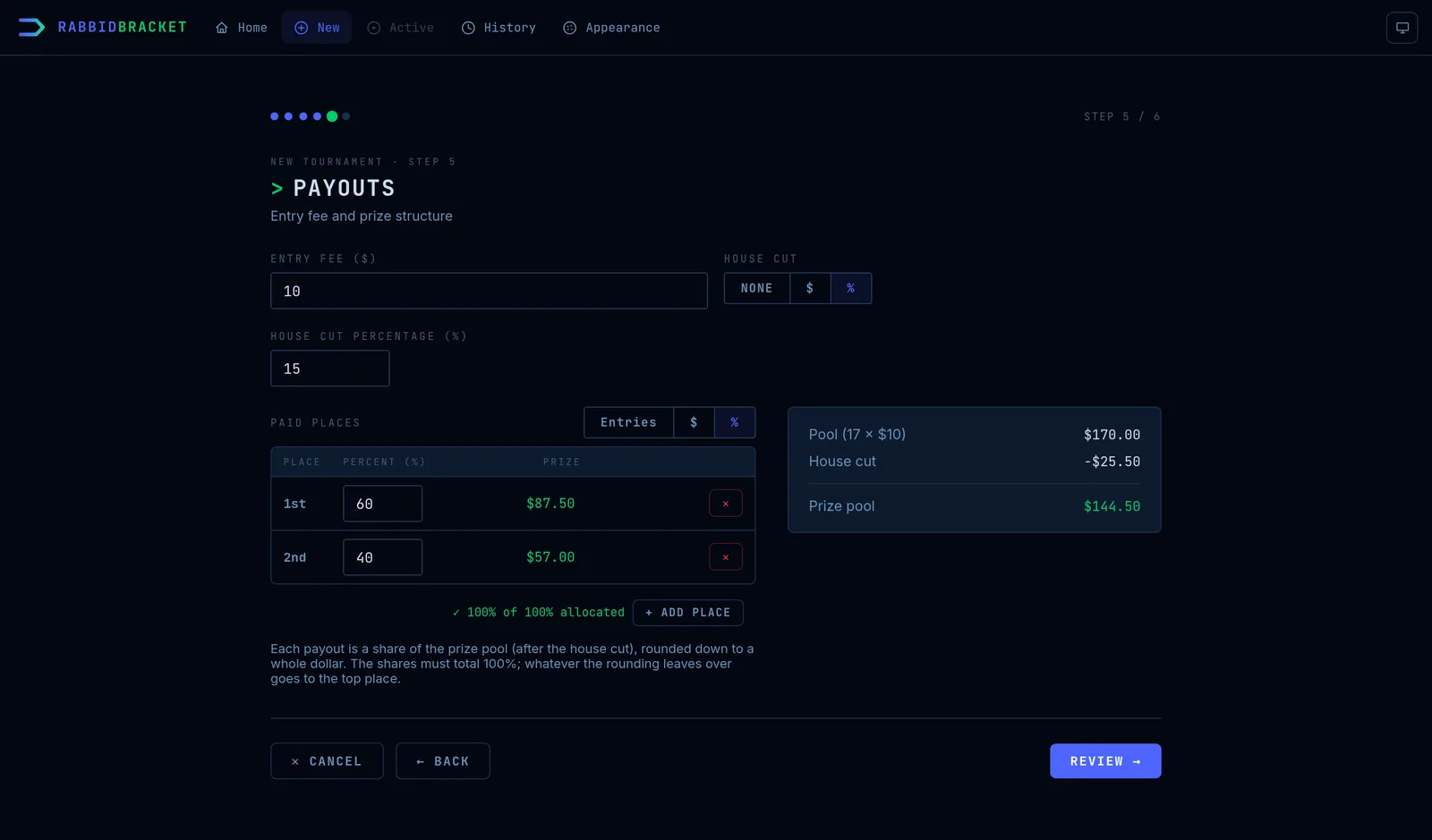
Pool = entry fee × players, less a dollar or percentage house cut. Pay places three ways — by
number of entries (a clean multiple of the buy-in), by
dollar amount, or by percentage of the prize pool for the classic
50/30/20 split. One mode for the whole table, up to 8 paid places, no mixing.
Entries and dollars must reconcile to the pool exactly — off by a cent is a validation
error, not a silent adjustment. Percentages must total 100%, round down to whole dollars so you're
handing out notes rather than coins, and give the leftover to the top place. A $170 pool with a 15%
house cut leaves $144.50; split 60/40 that pays 1st $87.50 and 2nd $57.00.
- Big screen
-
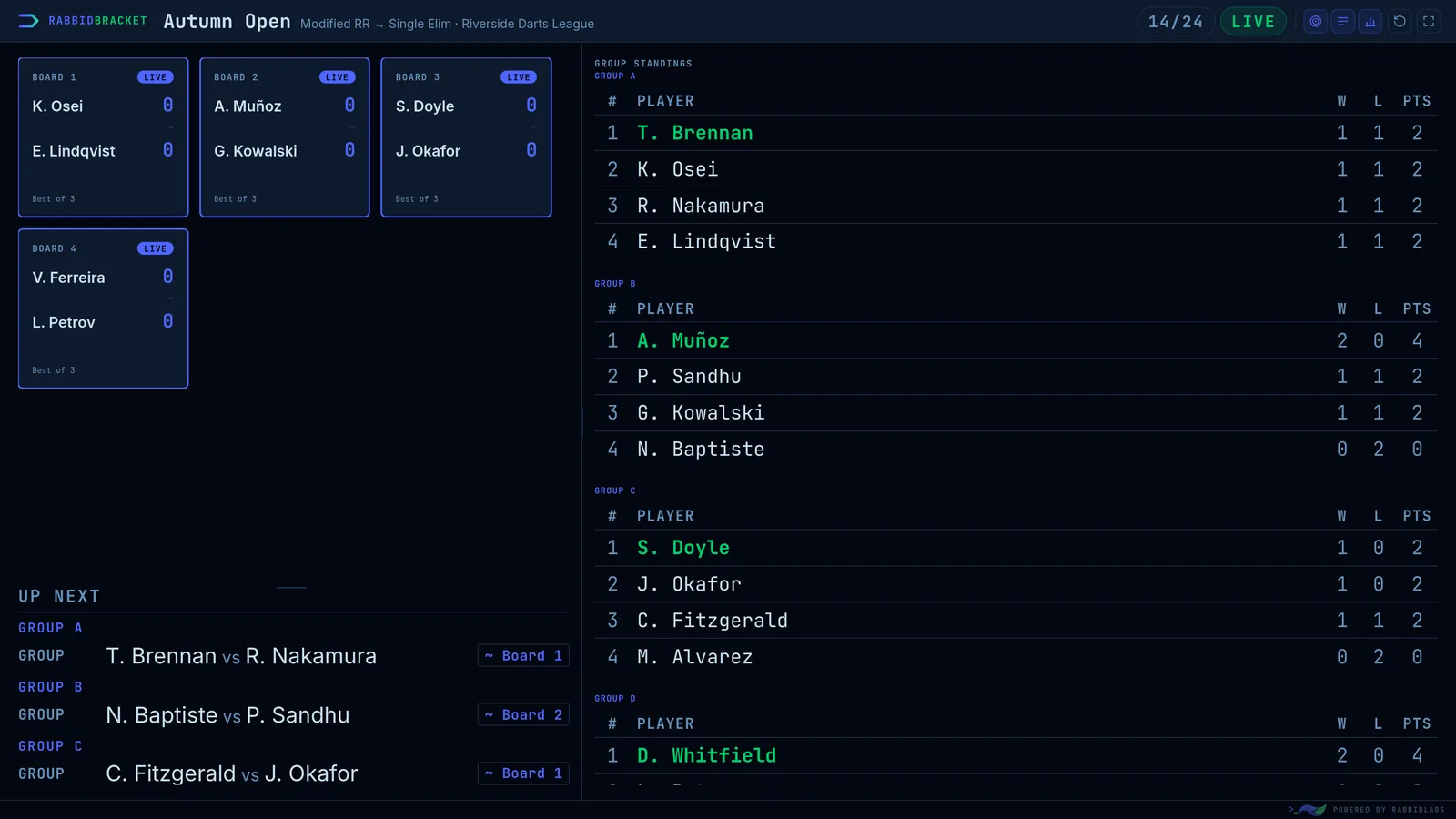
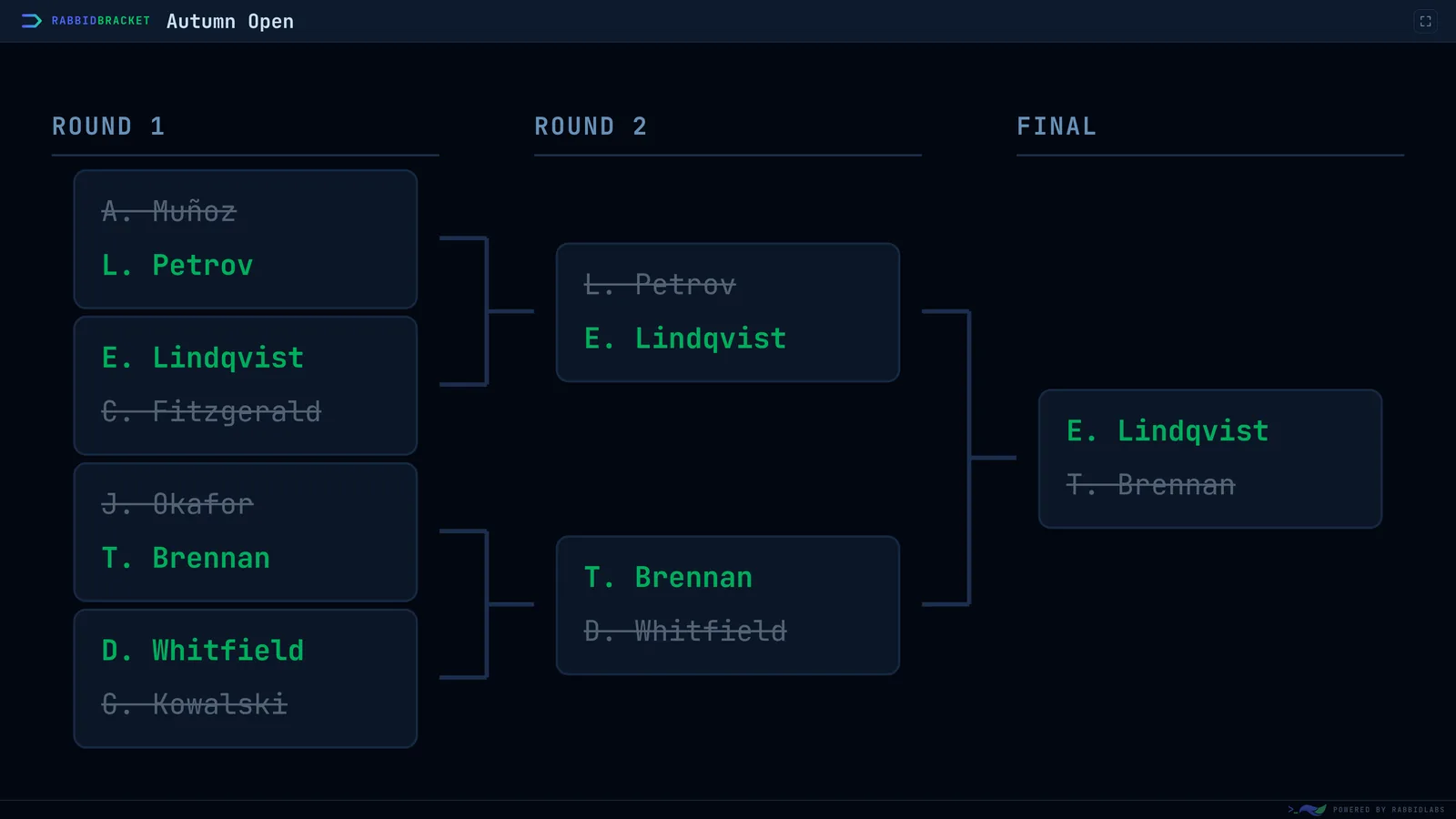
A read-only display window for the venue TV, live over the whole event. Choose the view per screen:
boards, bracket, groups, roster, a scrolling view for big fields, or Dixie standings.
Cards resize to fit any board count, and fullscreen is one click.
- Exports
-
A spreadsheet backup of the entire event, printable group sheets, and branded
PDF and PNG sheets — summary with champion, placements and prizes; round-robin
standings; the knockout bracket; and Dixie points standings. You only see the sheets that apply to
the format you ran. Dixie also gets its own
printable score sheet, whose Total column is a live formula
that adds itself up as you fill rounds in by hand. Themed to match your chosen scheme.
- Appearance
-
Twelve colour themes, dark and light, switchable live and applied to the operator screen, the TV, and
the exported sheets. Add your own logo for the sheets your players take home.