
The room reshuffles
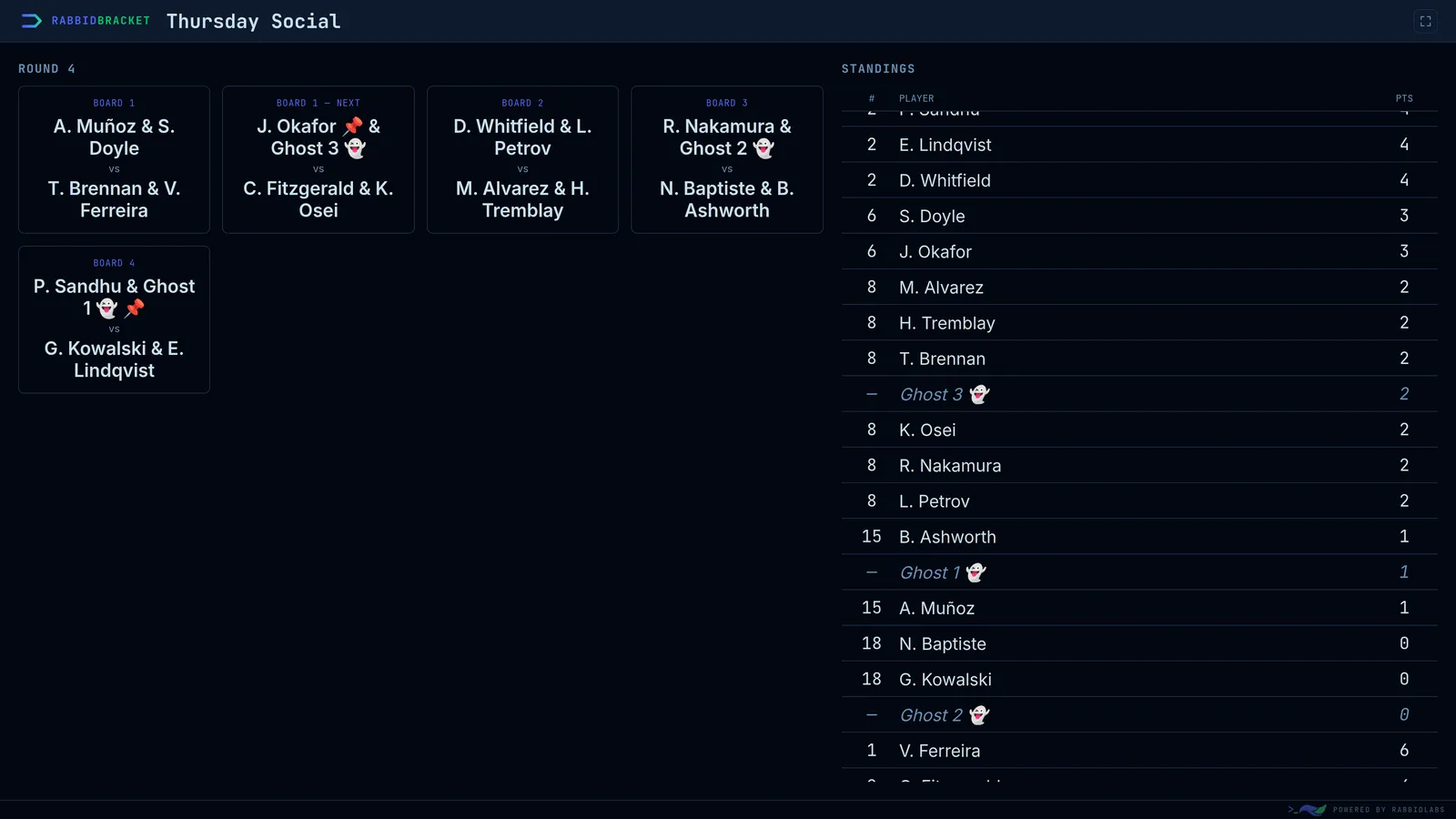
Every round, all players are drawn into brand-new two-person teams, and those teams are paired into four-player matches — two teams to a board. You never play the same lineup twice.
Dixie Darts is a round-based, bracket-free doubles format for steel-tip dart tournaments. Most tournament software assumes a bracket — Dixie doesn't have one. Every round the whole field is redrawn into fresh two-person teams and paired off across your boards, points follow the player rather than the team, and nothing eliminates anybody. It's the format for a league night rather than a title night.
Win the match and the player who hit the double scores 2, their partner scores 1, and both losers score 0. So a good partner is worth having — and being carried still puts points on your card.
Every round, all players are drawn into brand-new two-person teams, and those teams are paired into four-player matches — two teams to a board. You never play the same lineup twice.
The winning team's double-hitter takes 2 points and their partner takes 1. Losers take 0. There are no legs to configure — a Dixie match is a single game with fixed scoring.
The standings are just the running point totals. The player who'd have gone home first in a knockout is still throwing at the end of the night.
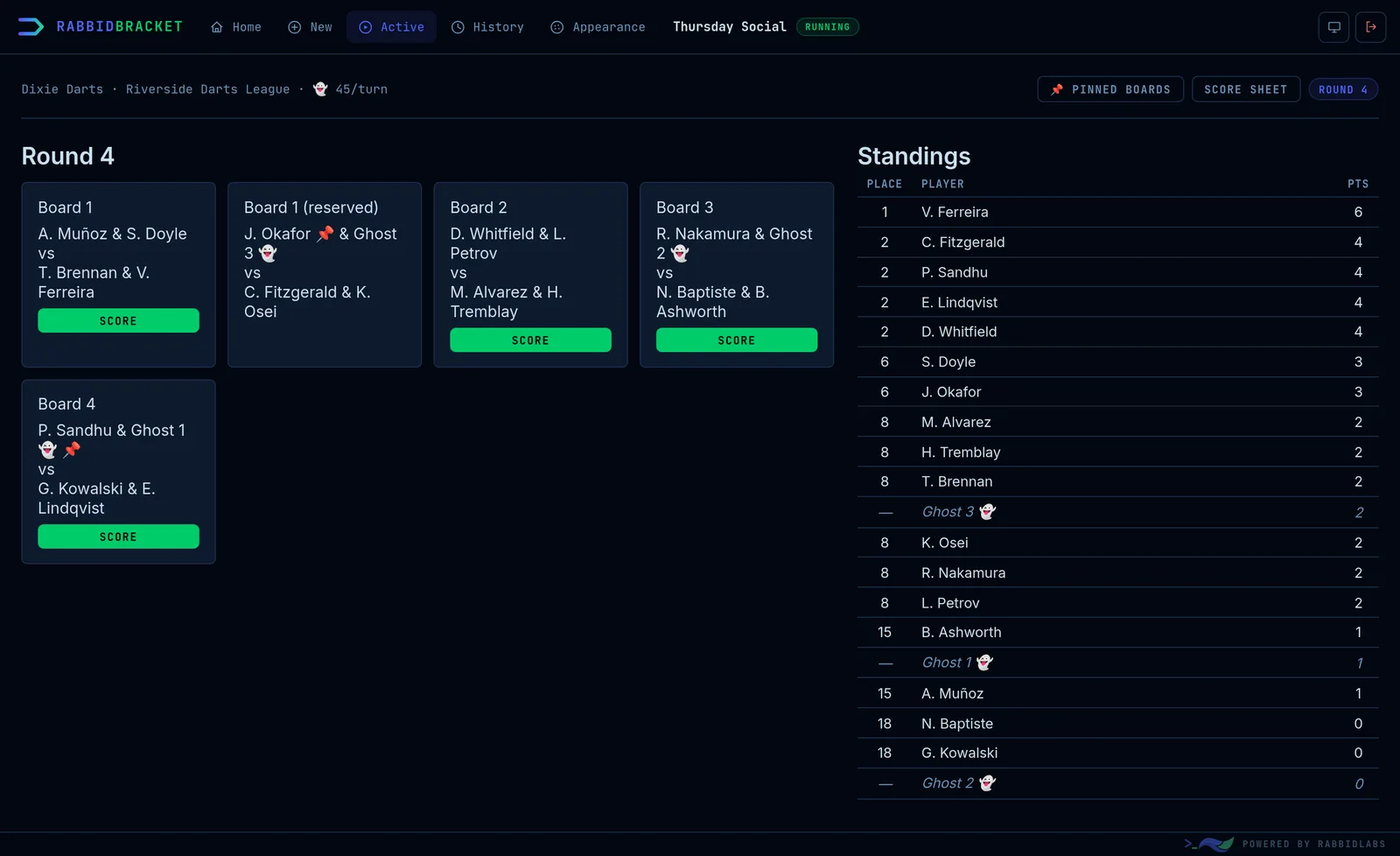
Dixie needs a field that divides by four. When yours doesn't, the app pads it with up to three ghost fillers — placeholder entries with a fixed per-turn score you set alongside the roster.
There is no fixed number of rounds to commit to up front. The app draws a round, you score the matches on the boards, and then you decide what happens next: play another round, take a break, or finish. You play until the room is done.
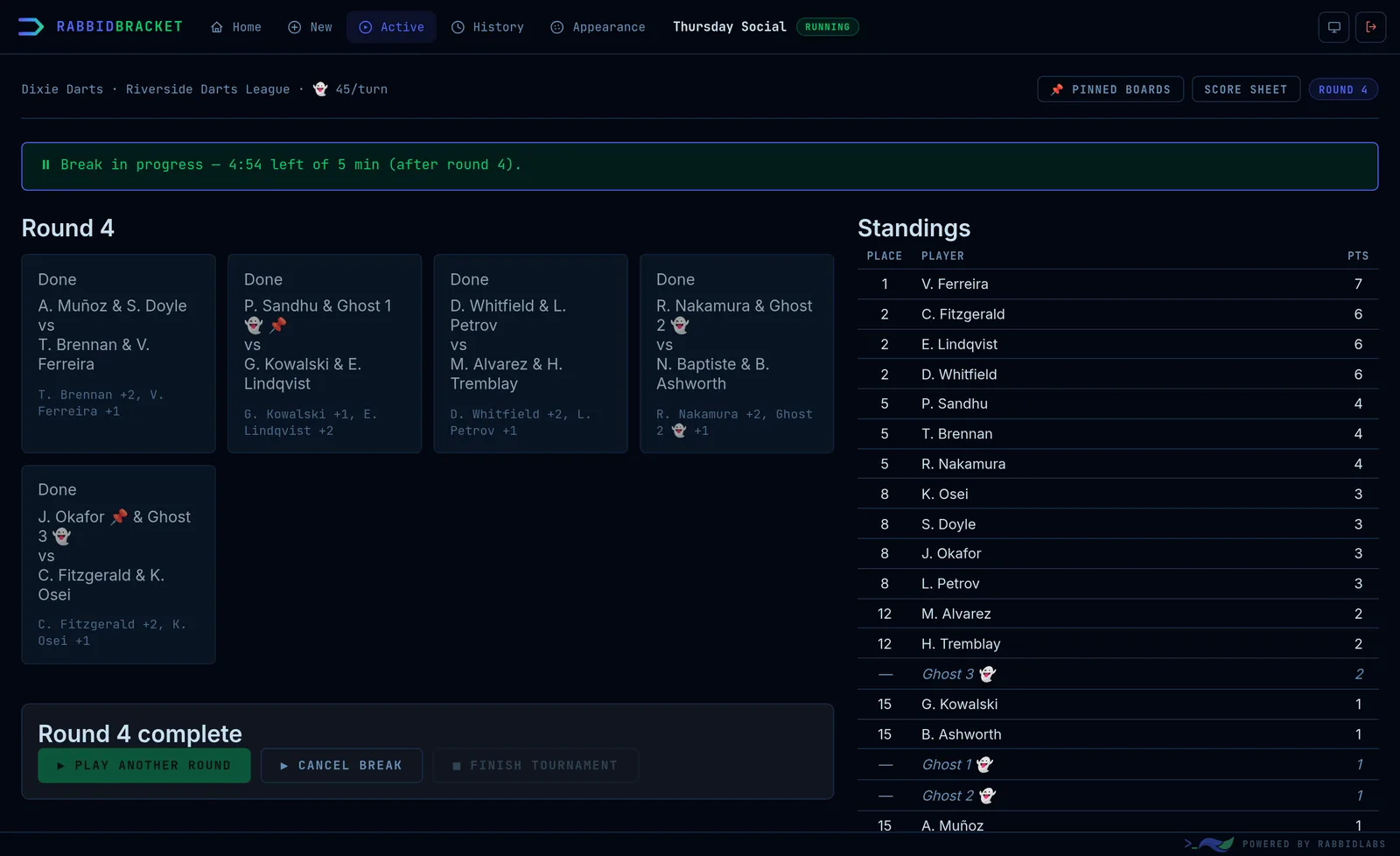
Dixie moves everyone around the room every round — which is exactly wrong for a player who can't. Pin them to a board and that's where they play, every round, all night. Pin the accessible board, pin a player on crutches, pin a ghost filler.
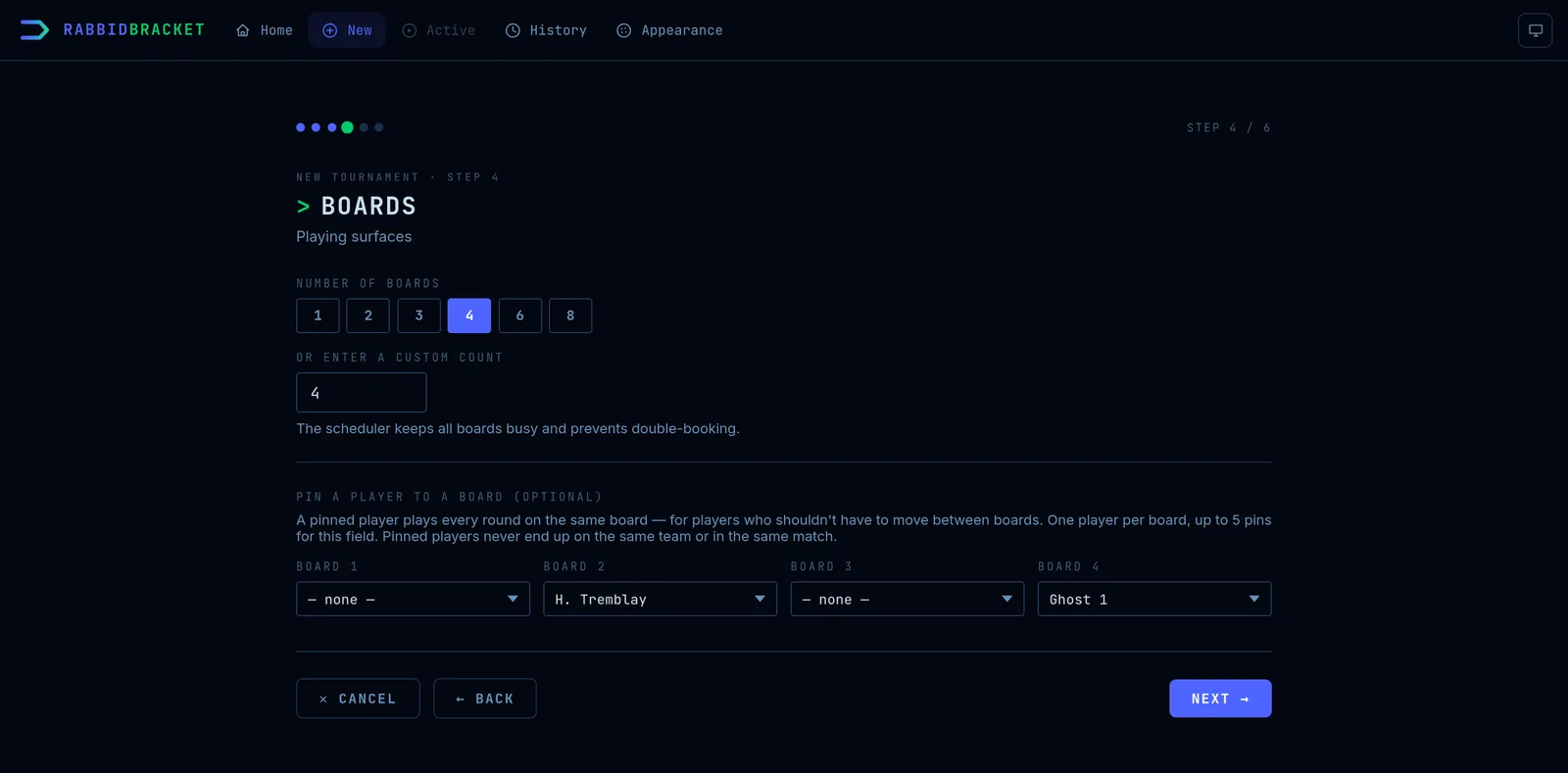
To be precise about what this is: it's board-assignment accessibility, not a conformance claim about the interface. It solves one real problem — a player who shouldn't have to walk the room — and it solves it properly.
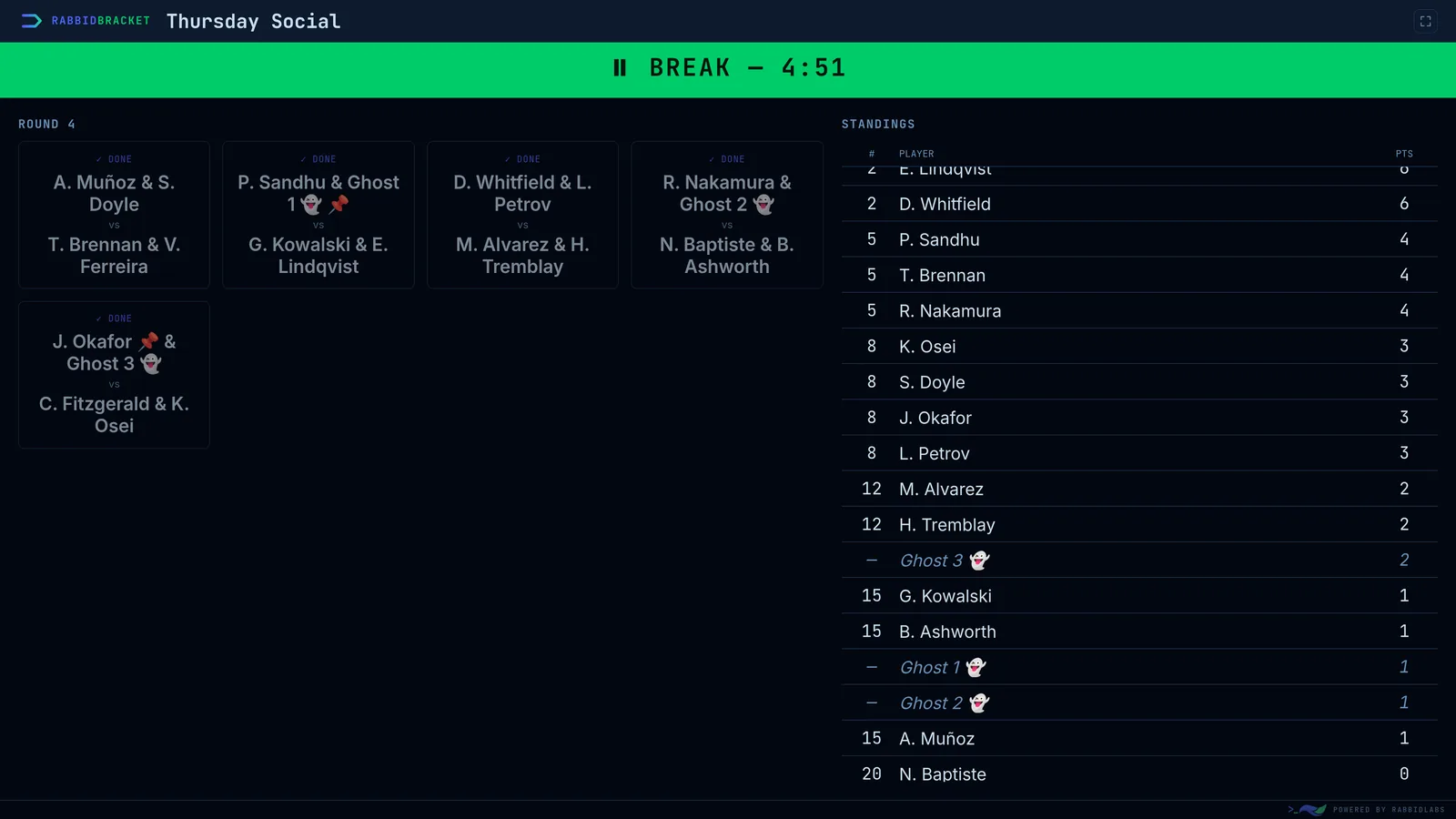
Dixie gets its own read-only display mode — the current round's matches and the running points standings, sized to read from across a room and updating live as results land.
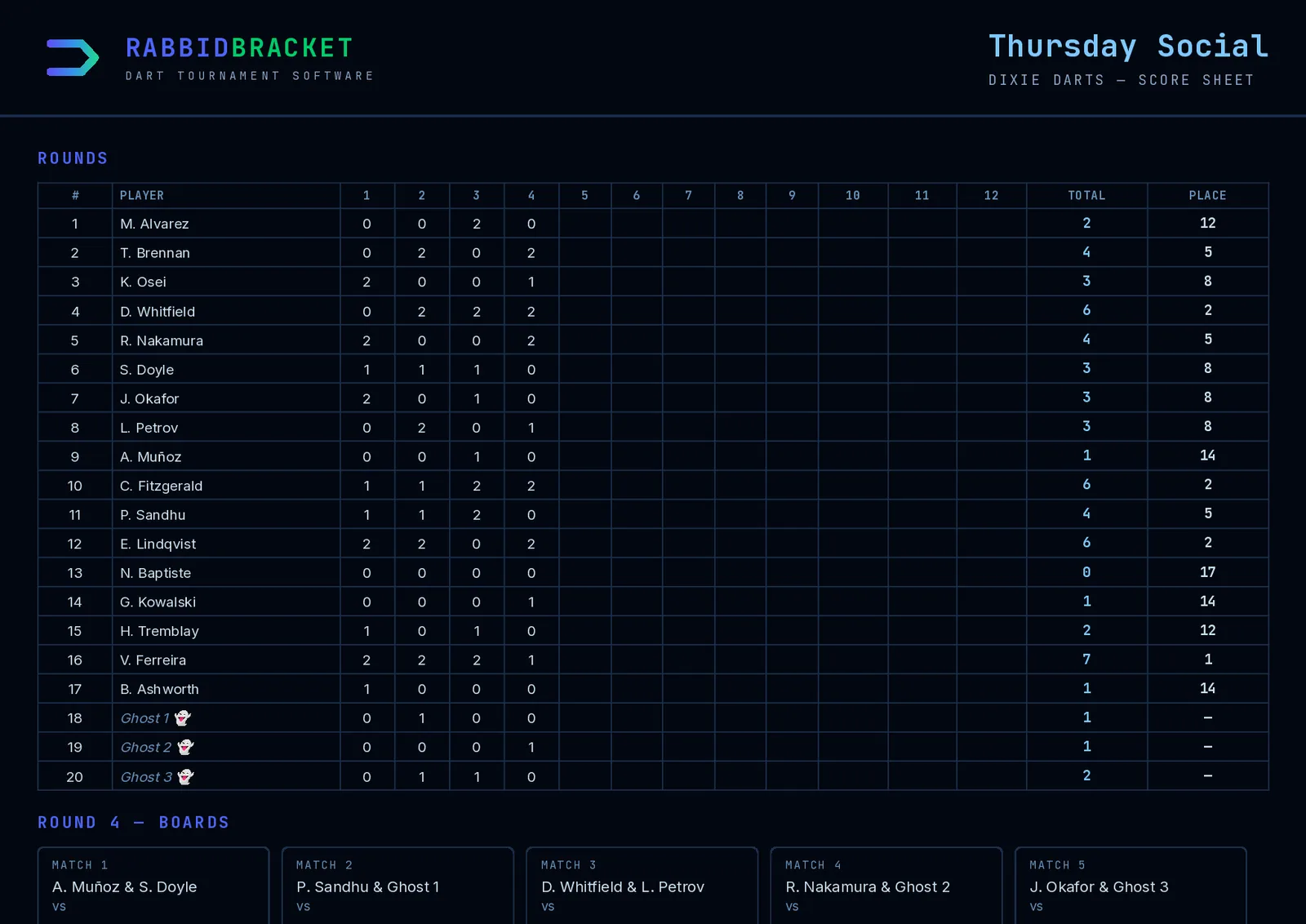
Download the Dixie score sheet at any point during the event, as a spreadsheet or a branded PDF — a grid of every player against every round, ready to post beside the boards or fill in by hand as a paper backup.
The Total column is a real spreadsheet formula, not a number frozen at export time. A sheet you downloaded at launch adds itself up as you write results into it. A blank row stays blank rather than showing a zero.
Ranks the real players off those totals the same way. Ghosts show a dash, since they take no paying place. The printable PDF carries the column too.
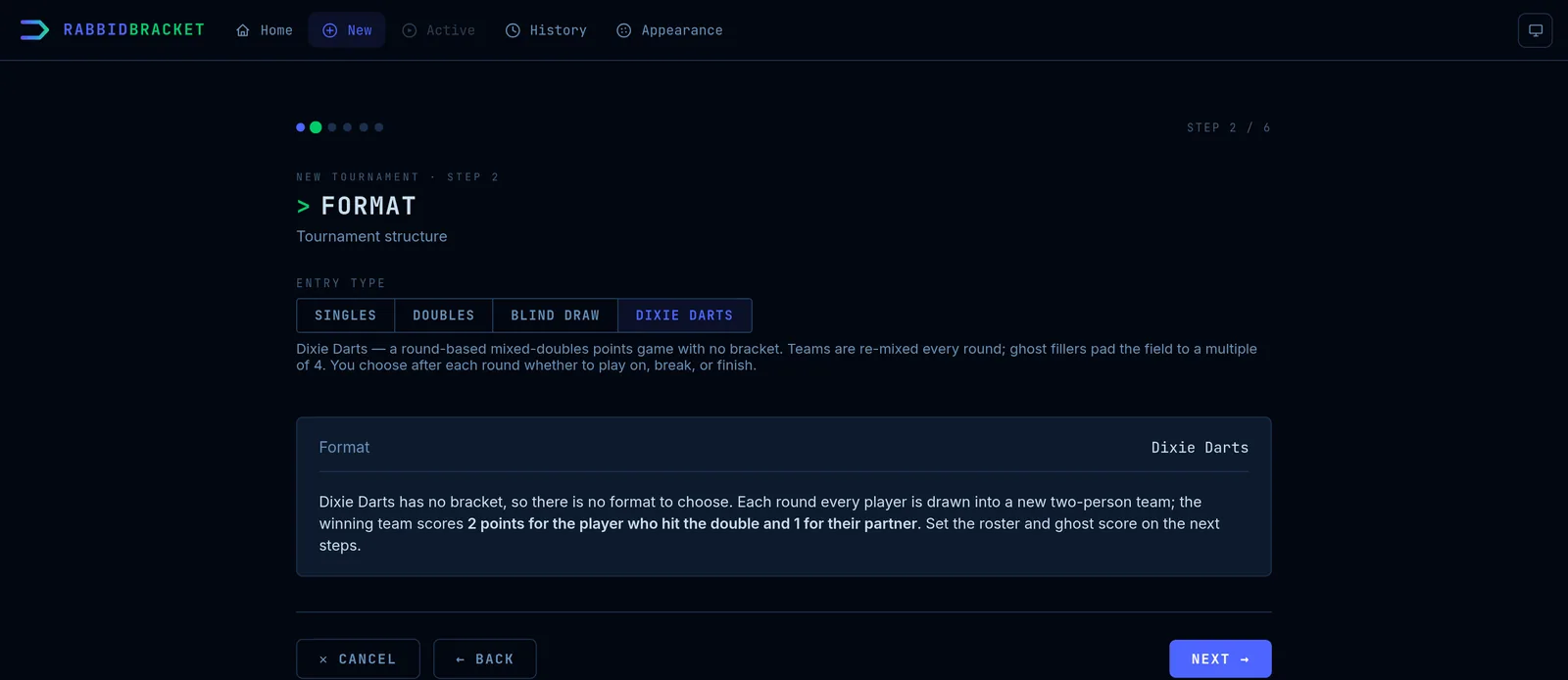
Dixie is picked as an entry type in step 2, which selects the format for you — there's no bracket to choose. Players are entered individually, like a blind draw, and the ghost fillers' per-turn score is set alongside the roster.
Tell us your field size, how many boards you've got, and whether anyone in the room shouldn't be walking between them. We'll show you Dixie running it.